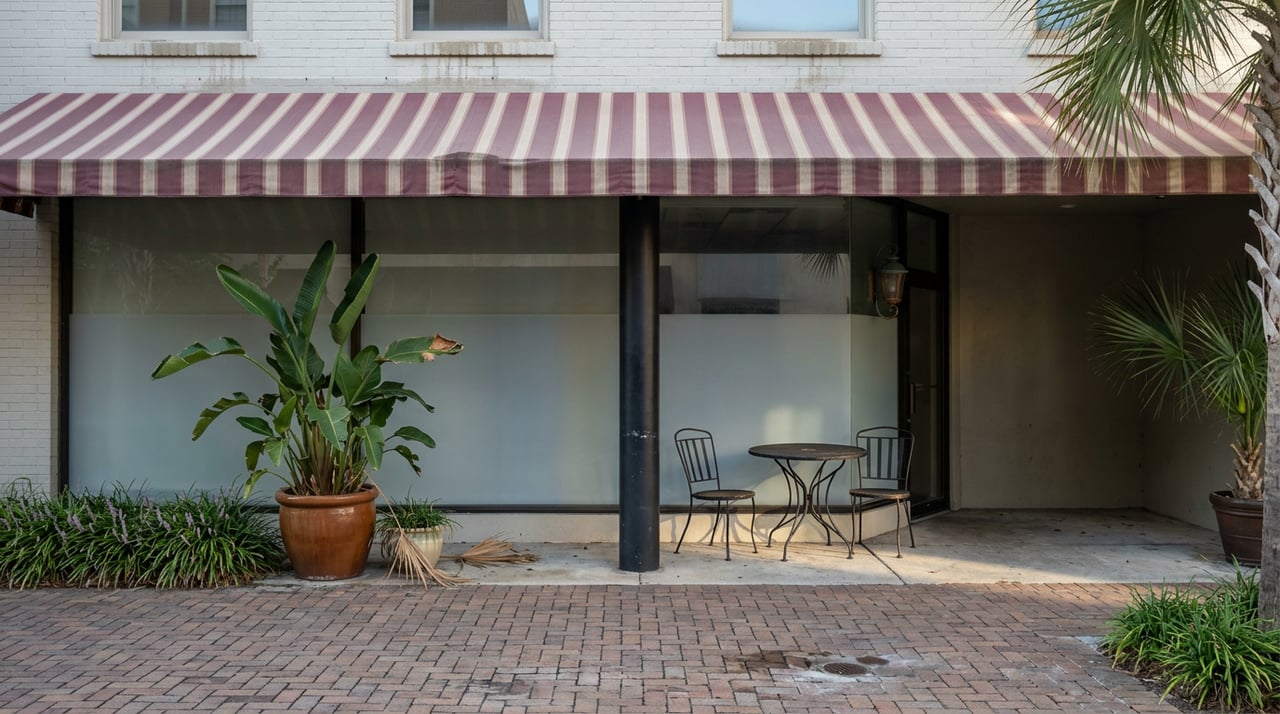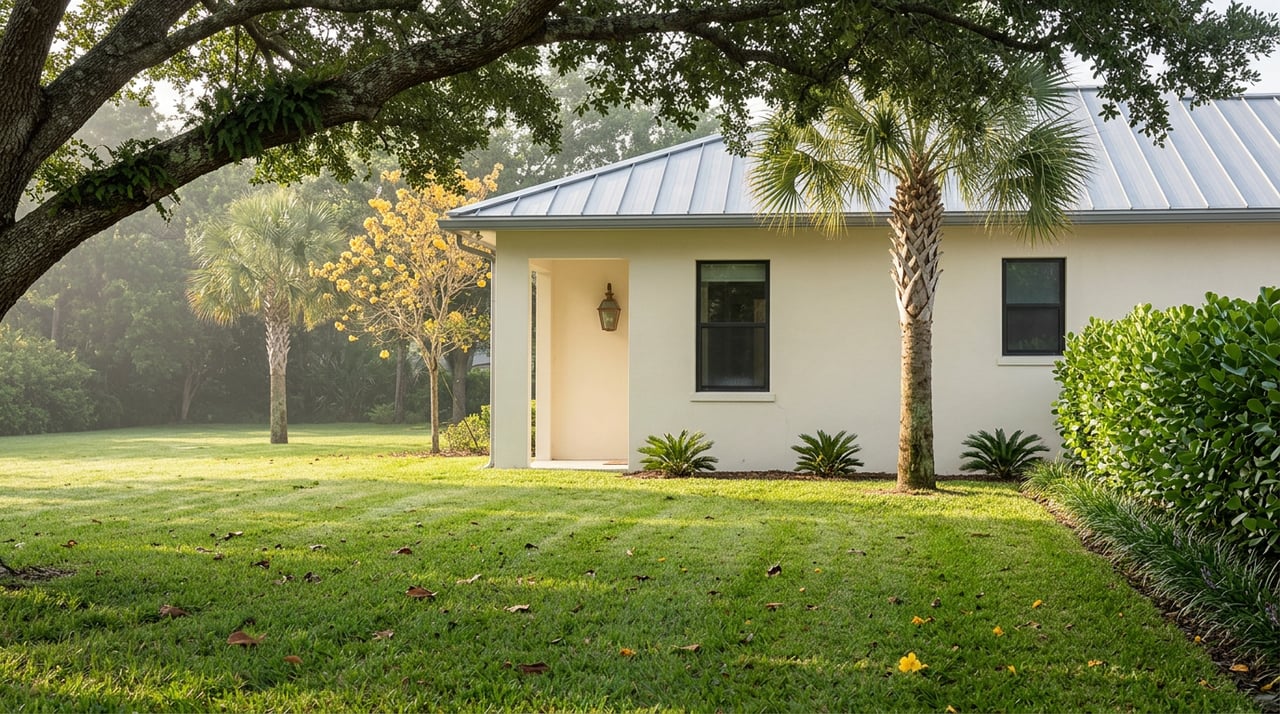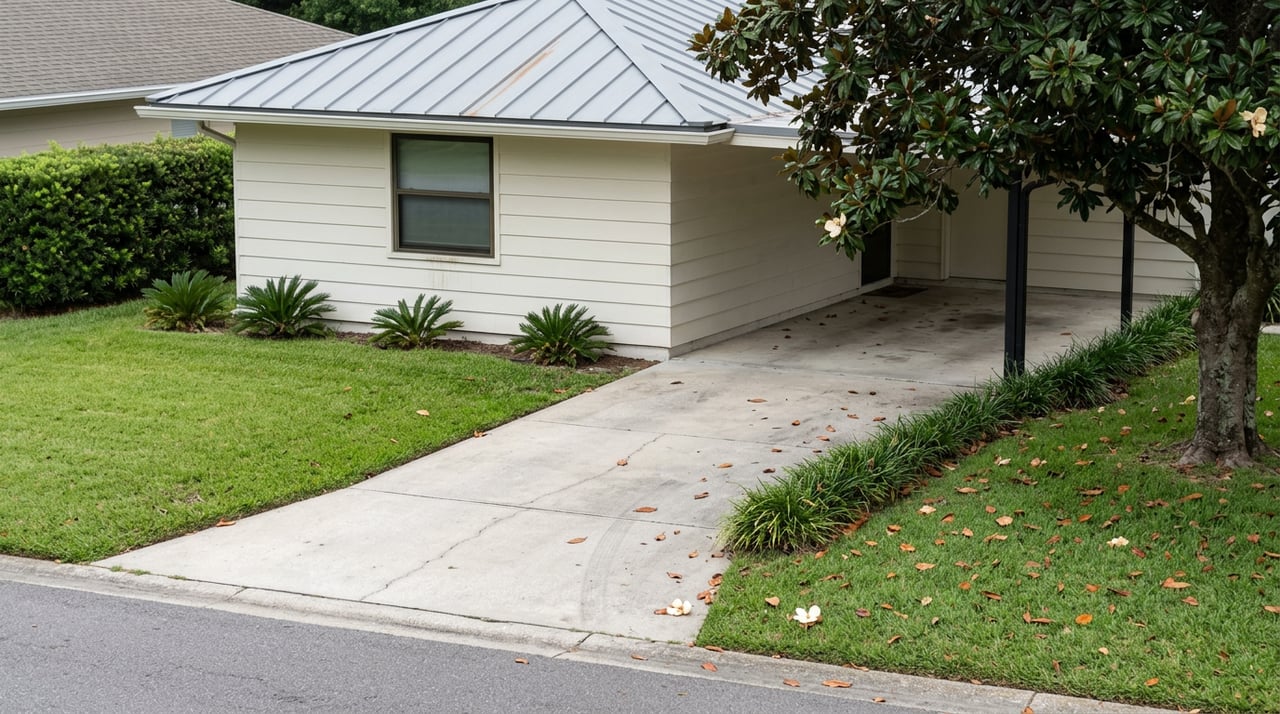
Walk a dog around Virginia Park on a Saturday morning and you'll cover a lot of ground before you pass a single coffee shop, restaurant, or corner store. That's not an oversight. Look at the neighborhood's own boundaries on file with the City of Tampa, and you'll find a rectangle of pure residential streets: W. Palmira Avenue to the north, S. Manhattan Avenue to the west, W. Euclid Avenue to the south, and Dale Mabry Highway and Bay to Bay Boulevard tracing the eastern edge. Inside that rectangle, there is no retail strip, no restaurant row, no place where neighbors bump into each other over coffee. Virginia Park was platted almost entirely for houses.
That's a strange thing for a neighborhood this popular with families and dog walkers to be missing. Most South Tampa pockets people love have some kind of commercial spine running through them. Virginia Park doesn't. What it has instead is three separate commercial districts sitting just outside its own lines, and residents have quietly built their routines around crossing into all three.
A neighborhood built for cars, not corners
Tampa's own planning materials describe Virginia Park's streets as a product of post-war development patterns, laid out with less of the routine sidewalk grid you'd find in older South Tampa sections like Hyde Park or Palma Ceia proper. There's no HOA governing the neighborhood either, which is part of why the housing stock reads as such a mix: 1950s ranch homes sitting next to new construction, with nothing enforcing a single architectural style block to block.
The tradeoff for that flexibility is that Virginia Park was never going to generate its own commercial center. A neighborhood built around driveways and garages, without a dense sidewalk network connecting corners to a town square, doesn't produce the kind of foot traffic that supports a coffee shop or a bakery. So none exists here. Anyone who wants that experience has to leave.
Three borrowed rooms
What makes Virginia Park work anyway is that it happens to sit inside walking or biking distance of three genuinely different commercial identities, each on a different side of the rectangle.
- South, across Bay to Bay Boulevard, into Palma Ceia Village and the Business & Design District. This strip along MacDill Avenue is where a lot of Virginia Park's actual errands happen. Village Health Market and Pane Rustica anchor the smaller Palma Ceia Village plaza alongside The Write Stuff, a stationery and gift shop, and Redneck Wine Company. A few blocks further down MacDill, the Palma Ceia Business & Design District adds Datz for brunch, Byblos, Drew Marc Gallery for contemporary art, Roost Home & Garden, and boutiques like Haute Shop and Penelope T's. Barcelona Wine Bar and Maru Nikkei sit at the walkable edge of that stretch too, which is a lot of range for a shopping district that technically belongs to the neighborhood next door.
- East, across Dale Mabry, toward SoHo. South Howard Avenue's restaurant row starts a short distance past Virginia Park's own eastern boundary. It's close enough that residents treat it as their dinner option without it ever being inside the lines on a map.
- South again, past Palma Ceia, to Bayshore Boulevard. The waterfront trail is a short walk or ride from most Virginia Park streets, and it's the one piece of infrastructure in the area that isn't retail at all: just a paved path along the bay that residents use for the actual daily exercise loop, distinct from the shopping trips.
None of these three are inside Virginia Park. All three function like they are, because nothing about the drive or the walk feels like leaving.
The one park that sits on the property line
If Virginia Park has an interior gathering point at all, it's Marcelino "Chelo" Huerta Jr. Friendship Park at 4124 W Bay to Bay Boulevard, and even that address gives away the joke: Bay to Bay is the boundary road itself. The park has shelters, grills, play courts, a playground, picnic areas, and restrooms, and it functions as the closest thing to a town square this neighborhood has. But it sits right on the seam between Virginia Park and its neighbors, which fits the larger pattern. Even the one piece of shared civic space wasn't built in the geographic center of the neighborhood. It was built where two neighborhoods meet.
For families with young kids, that positioning barely matters day to day. Friendship Park still reads as "our park" to anyone who lives within a few blocks, regardless of which side of Bay to Bay their house sits on.
The rituals that don't need a storefront
Not every neighborhood tradition requires a commercial district, and Virginia Park has built a few that run entirely on the residential grid itself. Halloween here is a full-participation event. Families report entire blocks of decorated porches with residents sitting out to watch the trick-or-treating rather than just answering the door, which is the kind of thing that happens when a street has no through traffic pulling drivers toward a business somewhere else. Christmas brings golf cart parades organized by neighbors rather than any homeowners association, since there isn't one to organize it. These aren't imported traditions borrowed from an adjacent commercial strip. They're homegrown, and they depend on exactly the quiet, car-light residential character that comes from having no retail pulling outside visitors through.
What the pattern actually means if you already live here
Put the pieces together and the shape of daily life in Virginia Park comes into focus. This is a neighborhood that outsources almost every errand, meal out, and boutique purchase to somewhere just across a boundary street, while keeping its own interior nearly free of anything that would draw outside traffic in. That's not a compromise residents are making. It's closer to the actual design logic of the place: quiet, low-traffic residential blocks precisely because none of the commercial gravity sits inside them.
It also explains something that trips up anyone reading a generic neighborhood profile. Descriptions calling Virginia Park "walkable to shopping and dining" are technically accurate and slightly misleading at the same time. The shopping and dining are walkable. They're just never inside the neighborhood itself. Every trip to Pane Rustica for coffee, every dinner on South Howard, every lap around Bayshore involves stepping across one of Virginia Park's four boundary streets first. Residents do it so routinely that the boundary stops registering, but it's there, and it's the reason the interior stays this calm.
If you're already living inside that rectangle, none of this probably surprises you once it's spelled out. You already know the walk to Palma Ceia Village takes ten minutes, that SoHo is a straight shot east once you cross Dale Mabry, that Bayshore is close enough to make part of a normal evening. What's easy to miss is that all three of those routines exist specifically because Virginia Park itself was never going to hold them. The neighborhood didn't fail to build a main street. It never needed one, because three of them were already standing just past the edge.
If you're curious how Virginia Park's layout compares to the more commercially woven blocks of Palma Ceia or the restaurant-dense stretch near Hyde Park, or you just want a local's read on how a specific street or block fits into this pattern, Kristen Richards knows this stretch of South Tampa block by block. Reach out to schedule a free market consultation whenever you're ready to talk through what you're seeing on your own street.